
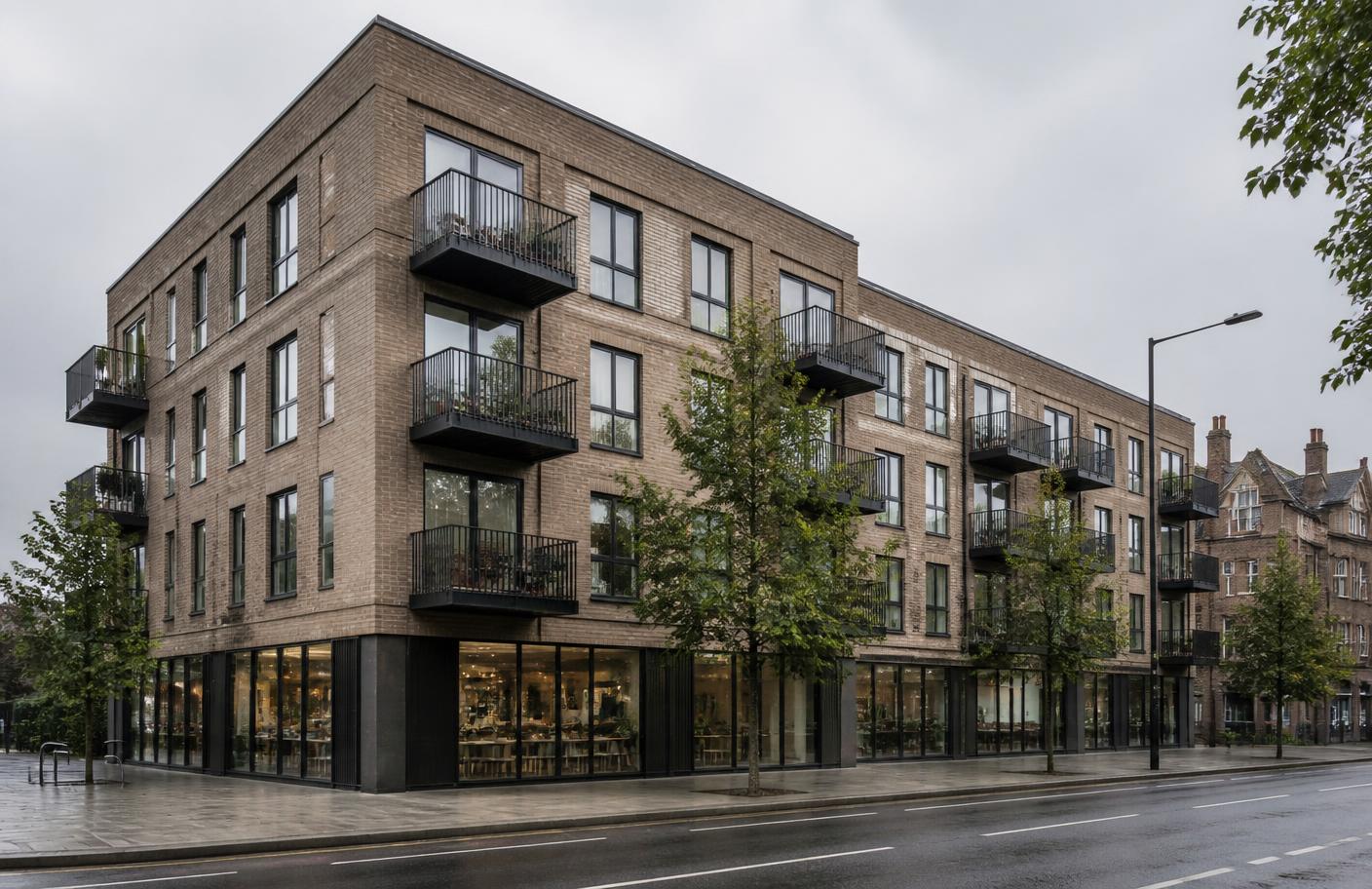


Why mixed-use schemes go wrong
The dwellings and the commercial space are assessed under different methodologies, with different targets and different reports. When they are modelled by different people, the shared systems get described twice, and rarely identically: a communal heat pump with one seasonal efficiency in the SAP model and another in the SBEM model, a heat network with different distribution losses on each side, a ventilation strategy that serves both but appears in only one. Building control notices, and the resulting queries land on the developer.
The boundaries that matter
Before modelling starts, the scheme needs clear answers on where responsibility sits: which areas are dwellings, which are non-domestic, how communal circulation is treated, whether plant serves both uses, and how metering is arranged. Those answers change both models, so we settle them at the start rather than reconciling two finished models later.
- Dwelling and non-domestic extents, floor by floor
- Communal circulation, plant rooms and refuse or cycle stores
- Shared heating, hot water and ventilation plant
- Heat network connection point and distribution losses
- Metering and, where relevant, monitoring obligations
Heat networks
Connection to an existing or planned heat network is common on London mixed-use schemes and interacts directly with Part L strategy, because the carbon and primary energy performance of the network drives the result for both the dwellings and the non-domestic space. The 2026 guidance adds routes for buildings, including mixed-use buildings, connected to a new or existing heat network to demonstrate compliance. Where connection is a planning requirement, the planning strategy and the Part L calculation need to be consistent, but they remain separate assessments.
Planning and Part L are not the same test
On a major London scheme, the planning-stage energy strategy under London Plan Policy SI 2 and the Part L calculation submitted to building control are related but separate. Meeting the planning requirement does not demonstrate Part L compliance, and passing Part L does not discharge a planning condition. We are explicit about which piece of work we are doing, and where a scheme needs a planning-stage energy statement we will say so rather than blur the two.