


Conversions

    Part L for conversions and change of use Quoted — on the drawings

    Part L for material changes of use: barn and office conversions, flats from houses, commercial to residential. Which standards apply, and how compliance is demonstrated.
    Registered assessorsLodged on the EPC RegisterTypically within 24 hoursFixed, transparent pricing
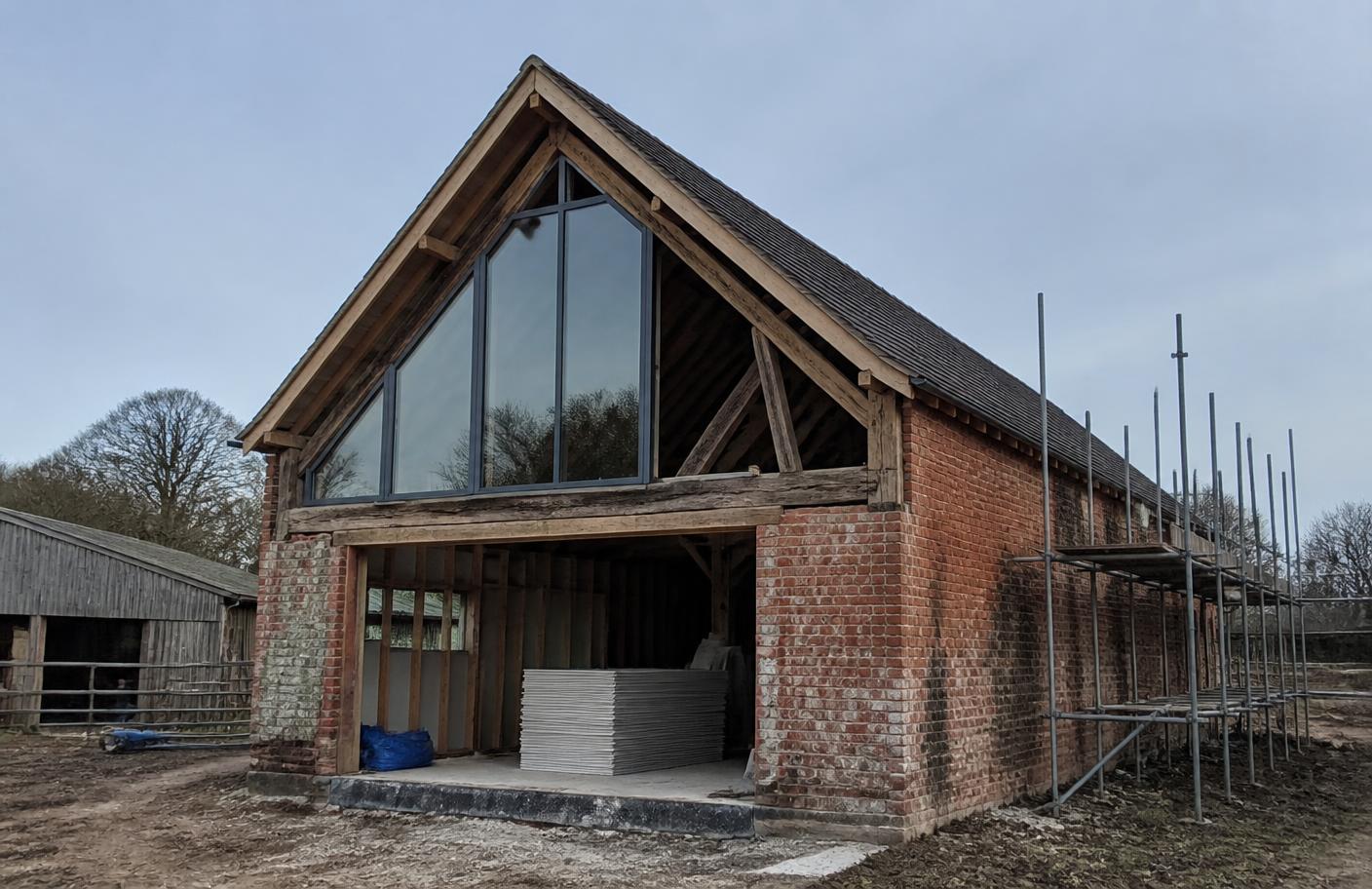
    Brick and timber barn part-way through conversion into a home, with a new glazed gable
    The short answer

    A material change of use brings Part L requirements that depend on the new use and on what is practical in the existing building. Converting to dwellings is assessed with SAP; a building remaining non-domestic is assessed with SBEM. Existing construction, heritage constraints and structural limits all shape what is reasonable, and that has to be argued in the submission rather than assumed.

    020 3092 8551

    Quoted

    on the drawings

    24hr

    Typical certificate turnaround

    4.9/5

    From 100+ reviews

    10 yrs

    EPC validity once lodged

    Reviewed by Awais Sarwar, MSc, accredited energy assessor and owner of Team EPC LtdLast reviewed

    To dwellings

    Assessed with SAP

    Remaining non-domestic

    Assessed with SBEM

    Element standards

    Differ for new, renovated and retained

    Feasibility

    Argued with reasons, decided by building control

    Awais Sarwar, founder of Part L Consultant

    Who runs your contract

    Awais Sarwar, MScAccredited Energy Assessor

    Awais is an accredited domestic and commercial energy assessor and the owner of Team EPC Ltd, which trades as Part L Consultant. He has surveyed and lodged EPCs across flats, houses, HMOs, managed portfolios and commercial premises throughout London and the Home Counties, and is currently studying an MSc in philosophy alongside running the business.

    EPC Register
    Accredited assessor
    MSc
    Built environment
    MSc Philosophy
    Currently studying
    10+ years
    London property
    Part L focus
    Design to as-built

    Off the clock: cricket, family time, an MSc in philosophy in progress and finding London's best food.

    Awais Sarwar away from work, out in a London park

    Awais Sarwar

    Founder · Accredited energy assessor

    About Awais

    What you get

    Everything included, nothing subcontracted.

    What is covered as standard on every conversions and change of use we carry out.

    The right methodology

    SAP or SBEM depending on the new use, decided before any modelling starts.

    Existing constraints recognised

    What is technically and functionally feasible in the building, set out with reasons.

    Thermal elements handled

    Retained, renovated and new elements each held to the right standard.

    Heritage-aware

    Where fabric cannot be altered, the case is made rather than glossed over.

    What counts as a material change of use

    Building regulations treat certain changes as material changes of use, which brings requirements that would not otherwise apply to an existing building. Creating a dwelling, creating flats, and changes involving hotels, institutions and public buildings are among them. Part L then applies to the building in its new use, with the extent depending on what is being changed and what is practical.

    Retained, renovated and new elements

    Existing thermal elements that are retained, elements that are being renovated, and entirely new elements are held to different standards. A retained solid wall may not be required to reach the standard for new construction, but a wall being re-lined internally is likely to be treated as renovated and expected to improve to a defined level unless there is a good reason it cannot. Getting these categories right at the start avoids both over-specification and a refusal.

    • New elements: the standard for new construction
    • Renovated elements: improvement to the level for renovation, where feasible
    • Retained elements: assessed for what is reasonable in the building
    • Controlled fittings: windows, doors and services to their own standards

    When compliance is not technically or functionally feasible

    Part L recognises that some improvements are not reasonable in an existing building, whether because of structure, moisture risk, heritage significance or the loss of usable space. That is a case to be made with reasons, not a blanket exemption, and the building control body decides. We set out what has been considered, why it was rejected and what is being done instead, which is what turns a constraint into an accepted position.

    Commercial to residential

    Office and commercial buildings converted to flats are common and rarely simple. Deep plans, large glazed areas, existing structural slabs and shared plant all limit the options, and the building may be moving from SBEM to SAP with none of the original data available. These schemes benefit most from modelling at the earliest design stage, when the unit layout is still movable.


    The difference

    Us versus a typical assessment.

    Plenty of certificates are produced in a rush, with no advice attached and an agency markup on top. Here is how we differ.
    Comparison between Team EPC and a typical commodity provider for Conversions and change of use
    AspectTeam EPCTypical assessment
    Existing fabricAssessed element by element with reasonsTreated as new build
    ConstraintsDocumented case for what is feasibleIgnored until building control objects
    TimingModelled while layouts can still moveAfter the layout is fixed

    How it works

    From enquiry to compliant.

    1. 01

      Drawings

      Send plans, sections and the outline specification for a fixed written quote.

    2. 02

      Design stage

      The building is modelled in SAP or SBEM and any shortfall flagged early.

    3. 03

      On site

      Specification changes, testing and commissioning evidence kept aligned.

    4. 04

      As-built sign-off

      As-built calculation, compliance report and the on-construction EPC.

    Trusted by the teams we work for across London

    Audi
    Kia
    Car Giant
    GB News
    Budgens
    Pepe's Piri Piri
    Chicking
    Chaiwalla
    Zoomo
    Northwood
    Audi
    Kia
    Car Giant
    GB News
    Budgens
    Pepe's Piri Piri
    Chicking
    Chaiwalla
    Zoomo
    Northwood

    Book your conversions and change of use from Quoted.

    Tell us about the property and you will see a price in under a minute. Qualified registered assessors, certificate lodged typically within 24 hours of the survey.
    020 3092 8551

    No obligation. We answer the same day.

    Frequently asked questions

    Last word

    Ready when you are.

    Send the drawings, get a fixed written quote, and have the design-stage calculation before work starts on site. That's the whole process.

    020 3092 8551
    Transparent pricing No obligation SAP, SBEM and EPCs England and Wales
    Awais Sarwar
    — Awais Sarwar, MSc
    MD · Accredited energy assessor
    SAP & SBEM calculations·
    Fixed written quotes
    Call