

The dates that decide your pipeline
The 2026 regulations and Approved Documents were published on 24 March 2026. General commencement is 24 March 2027, and provisions for work on higher-risk buildings commence on 24 September 2027. For work that is not on a higher-risk building, the transitional arrangement allows the previous standard to continue where a building notice, initial notice or full plans application was given before 24 March 2027 and work starts on that individual building before 24 March 2028. Higher-risk building work has its own conditions tied to a valid application to the regulator.
- 24 March 2026: 2026 regulations and Approved Documents published
- 24 March 2027: general commencement
- 24 September 2027: higher-risk building work provisions commence
- 24 March 2028: latest start on site for non-HRB transitional protection
What a review covers
We look at each live and pipeline scheme against those dates, identify which buildings are protected and which are not, and then test the house or building types you use most against the 2026 requirements. The output is a short document you can act on: the buildings at risk, the types that need rework, and the specification decisions worth making now rather than in 2027.
What changes under the 2026 standard
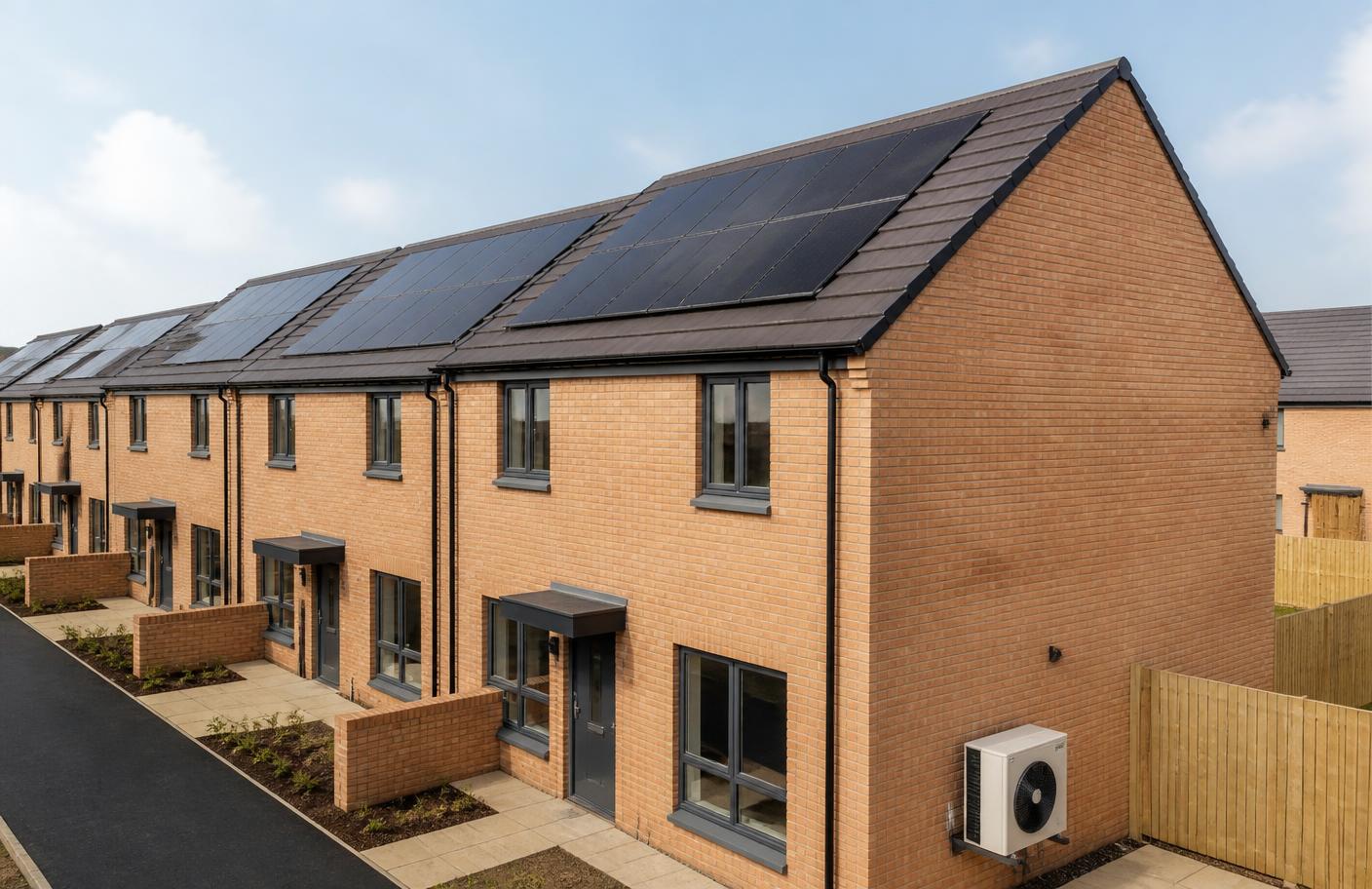
The 2026 Approved Document L requires new dwellings to include renewable electricity generation, and the guidance is restructured with changes in scope and additional coverage of areas such as heat networks. The detailed effect on any given house type depends on its form, orientation and services, which is why the useful answer comes from modelling your types rather than from a summary. Figures circulating for headline carbon reductions or minimum solar sizing are not something we will state as fact until we can cite them from the published documents.
Why the transition is worth planning now
A protected building is protected only if the application is in and work starts within the window, and both are programme decisions rather than compliance decisions. Knowing which buildings fall either side lets you sequence applications and starts deliberately, and lets you develop 2026-ready types for the ones that will not be protected, rather than reworking them under time pressure.